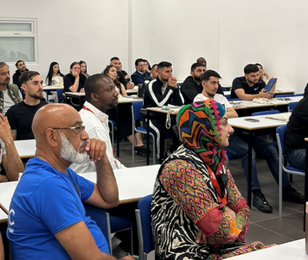
At UKMC, we deliver the University of Wolverhampton’s BSc (Hons) Health and Social Care with Foundation Year in a warm, friendly and supportive environment. You’ll be working towards a respected University of Wolverhampton degree while benefiting from UKMC’s smaller class sizes, personalised approach and dedicated student support. Our teaching methods include activities, exercises, quizzes, and formative assessments to help you stay on track with learning outcomes and assessment expectations.
From the very start of your foundation year, you’ll be taught by approachable lecturers who get to know you as an individual, not just a name on a register. Wherever possible, larger groups are taught in smaller classes, so you have more direct contact with your tutors and plenty of chances to ask questions and join in discussions. You won’t just be sitting and listening – you’ll learn through activities, case studies, quizzes, group work and regular check-ins to help you stay on track with your learning goals and assessments.
You’ll receive one-to-one support with your assignments and assessments throughout the course. Module tutorials, workshops and “assignment unpacking” sessions make it clear what you need to do and how your work will be marked. Study skills classes, peer study groups and a mix of assessment types (such as essays, presentations and reflective tasks) recognise that everyone learns differently and help you build the academic skills you need for higher-level study.
As a UKMC student on a University of Wolverhampton programme, you’ll have access to extensive library resources and a wide range of online learning materials, along with specialist study skills and academic support. If you have a specific learning need, we can help arrange additional support and reasonable adjustments so you can take part fully and confidently in your studies.
Your wellbeing is just as important as your grades. UKMC offers a range of student support services, including one-to-one advice and guidance, mental health and wellbeing support, information about financial aid, and self-care resources to help you balance your studies with your personal life.
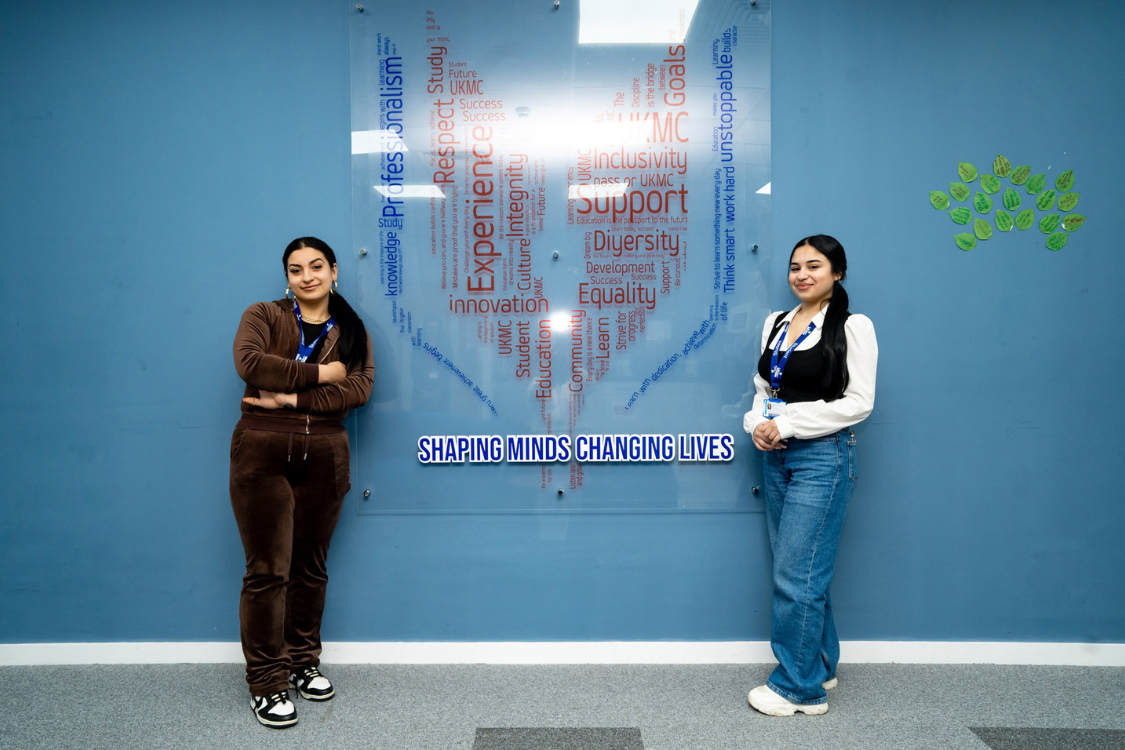
Above all, UKMC is a welcoming place to learn. We are guided by values of respect, inclusion and collaboration in everything we do. You’ll be encouraged to share your ideas, take part in debate and reflect on real-world health and social care practice in a safe, supportive environment where your voice and lived experience are genuinely valued.
Year 1 (Level 3) Modules
- Empowerment in Social Care (Credits: 20)
- Interprofessional Learning (Credits: 20)
- Preparing for Undergraduate Study (Credits: 40)
- Social Care Context and Delivery (Credits: 20)
- Valuing the Self and Others (Credits: 20)
Year 2 (Level 4) Modules
- Academic, Personal & Professional Development II - Skills for Practice (Credits: 20)
- Health, Society & Culture (Credits: 20)
- Introduction to Health and Wellbeing (Credits: 20)
- Introduction to Research Skills (Credits: 20)
- Introduction to Social Care and the Mixed Economy of Welfare (Credits: 20)
- Social Care Values, Equality and Diversity (Credits: 20)
Year 3 (Level 5) Modules
- Developing Research Skills (Credits: 20)
- Mental Health and Wellbeing (Credits: 20)
- Partnership and Collaborative Working in Health (Credits: 20)
- Social Care Interventions: Working with Adults (Credits: 20)
- Sustainable Healthy Communities (Credits: 20)
- Working with Children and Families (Part 1) (Credits: 20)
Year 4 (Level 6) Modules
- Appraising Health Policy and Practice (Credits: 20)
- Independent Research and Practice (Credits: 20)
- Law and Ethics in Health (Credits: 20)
- Leadership and Management in Health (Credits: 20)
- Technology and Innovation in Social Care Practice (Credits: 20)
- Working with Youth and Families (Part 2) (Credits: 20)
Entry requirements are subject to regular review. The entry requirements applicable to a particular academic year will be published on the University website (and externally as appropriate e.g. UCAS)
Entry onto Foundation (Level 3):
Academic Route
Applicants are expected to have achieved either a minimum two A Levels at grade DD/Equivalent;
or BTEC
or T Level Pass;
or A combination of qualifications totalling 48 UCAS points minimum.
or Access to HE Diploma
Non Academic Route
You will be required to attend and pass a compulsory Prepare For Foundation assessment day where you will take part in a variety of activities which will assess your suitability for the course.
Applicants must be able to demonstrate, through activities, and written description of their previous experience and study/career goals, or other admissions processes such as interview for the course. The applicant should demonstrate a genuine commitment and motivation for higher education study in this subject. Please see http://wlv.ac.uk/mature for further information.
For Students applying without academic qualifications, applicants must have studied or demonstrate appropriate experiences a minimum of two years post GCSE level.
Mature Students
It is expected that some applicants will be mature students with work experience, who wish to further their career development. These applicants will be processed through the Awarding University’s standard admission procedures, which may involve an interview as part of the process, or request of other documents such as detailed above.
UK Management College will conduct any necessary initial interviews and the initial admissions processes to evaluate eligibility.
Please see http://wlv.ac.uk/mature for further information.
The teaching is carried out by qualified lecturers at UK Management College. The UK Management College lecturers are supported by the Awarding University faculty module leaders who will provide academic support.
This is a blended learning course with supportive and structured learning activities on Canvas (Virtual Learning Environment, VLE).The online materials and face-to-face components of the module are integrated into a complimentary learning experience, which is both engaging and relevant, and resources are up to date and tailored with knowledge relevant to the industry and employability skilss needed for gainful employment following studies.
Resouces are accessible online and each Virtual Learning Environment (VLE) Homepage sets expectations and includes an orientation to help you understand how to successfully navigate the different online components of the module and prepare for the face-to-face meetings.
The structure of each VLE topic follows a standard Business School layout to ensure consistency and familiarity for students and to help you navigate the different modules you will be studying.
The VLE Pages are used to present learning inputs and related activities with a narrative flow; content is structured into bite sized inputs and activities, inclusive of any Panopto recorded slides.
The learning material will be contextualised by the UK Management College lecturers to reflect the local and regional context. Students also have formative opportunities for feedback as part of their teaching and learning.
The workshop and activity-based approach to learning enables multiple opportunities for formative feedback and Regular opportunities are built in for formative feedback in class and online. For summative assessments on modules with more than one tutor a marking rubric is used to ensure consistency and you will receive summative feedback via Canvas within four working weeks of submission. Your feedback may be written, oral or audio-visual in nature.
Blended learning lends itself to enquiry-based learning - this puts less emphasis on the lecture method of teaching and more on empowering you to solve problems, evaluate situations, research topics or apply principles, which is more appropriate to business education. Face-to-face sessions are delivered in workshop mode with a set of task-based activities, which draw on the online content, and enable you to practically and critically explore the topic individually and in small groups.
Opportunities are built in for you to collaborate in peer-to-peer learning activities. This could include things such as small groups using a flipped learning approach, small group case study analysis, student-led assessment unpacking, group discussions, student-led seminars and problem-based learning.
The modules are developed with Universal Design in mind, and to meet accessibility standards. At UKMC our Student Success Tutors are also qualified to a level of degree level support. SST's are able to support understanding and learning outside of classes, such as academic skills and engagement activities.
For summative assessments on modules with more than one tutor a marking rubric is used to ensure consistency and you will receive summative feedback via Canvas in line with University of Wolverhampton's feedback policy. Your feedback may be written, oral or audio-visual in nature. Blended learning lends itself to enquiry-based learning - this puts less emphasis on the lecture method of teaching and more on empowering you to solve problems, evaluate situations, research topics or apply principles, which is more appropriate to business education. Face-to-face sessions are delivered in workshop mode with a set of task-based activities, which draw on the online content, and enable you to practically and critically explore the topic individually and in small groups. Opportunities are built in for you to collaborate in peer-to-peer learning activities
Wellbeing support and resonable adjustments can also be discussed with the Wellbeing or SST teams to understand learning needs during your studies.
Lecturers will also ensure that there are adequate descriptions provided in PowerPoint slides or transcripts where available.
Case studies, examples and resources are drawn from a wide range of business cultures and contexts representing our diverse and international community.
At UK Management College, in partnership with the University of Wolverhampton a variety of modes of assessment will be used to support and test your learning and progress and to help you develop capabilities that are valued beyond your university studies and into your working life.
Your course may include a variety of assessment activities which includes written examinations (including online examinations, open and closed book examinations, and quizzes) Coursework (for example, essays, reports, portfolios, project proposals and briefs, CVs, poster presentation) Practical (for example, oral and video presentations, laboratory work, performances, practical skills assessment).
The type of assessment you receive is determined by the modules you take. This combination is designed to increase individual knowledge and skills in applying theory and best practices to real – world situations.
In the final year of your undergraduate degree, you are likely to be expected to write an extended piece of work or research, such as a dissertation or a practice-based piece of research or project.
Date and method of feedback is provided in the assessment brief for each module. All feedback on a student's work will be returned electronically. All feedback will be available in one location (i.e., Canvas).